

1
Handle with care
Avoid impacting the tank body. Never toss or hit tanks during use, movement or filling.

Liquid nitrogen storage systems
Cryogenic tanks for biobanks, hospitals and laboratories. Built for −190 °C, minimal nitrogen loss and samples you can trust for years.
The lineup
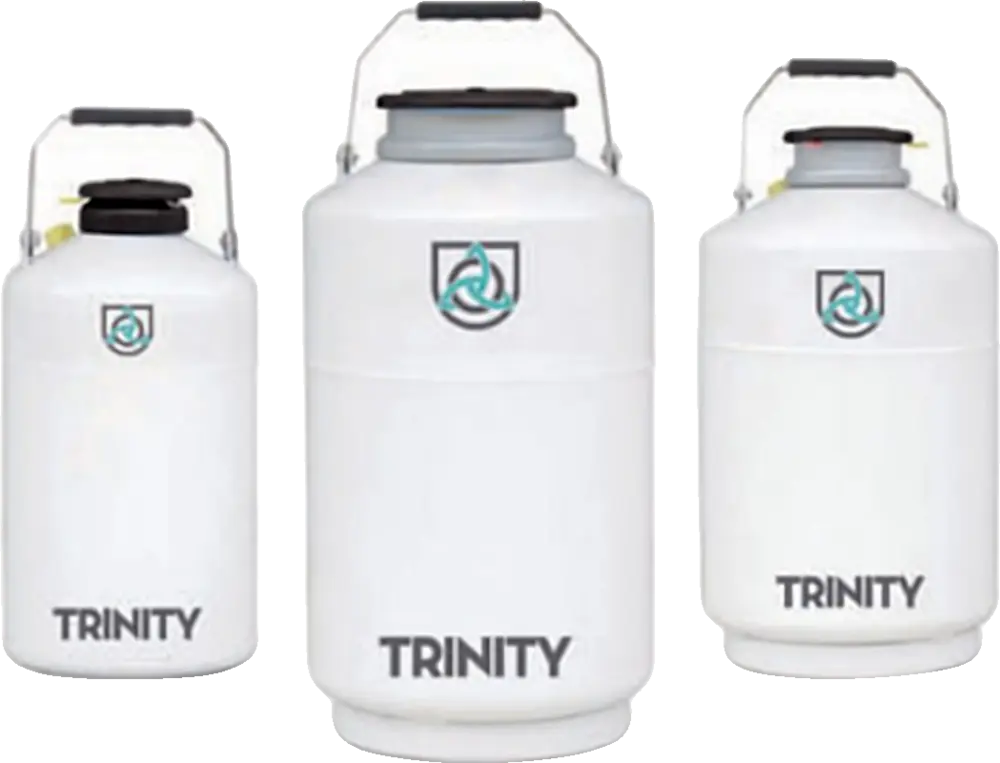
From a one-litre dewar on the bench to a 1,800-litre biobank, every Trinity tank is engineered for uniform temperature and ultra-low evaporation.
Maximum capacity. Minimum nitrogen.
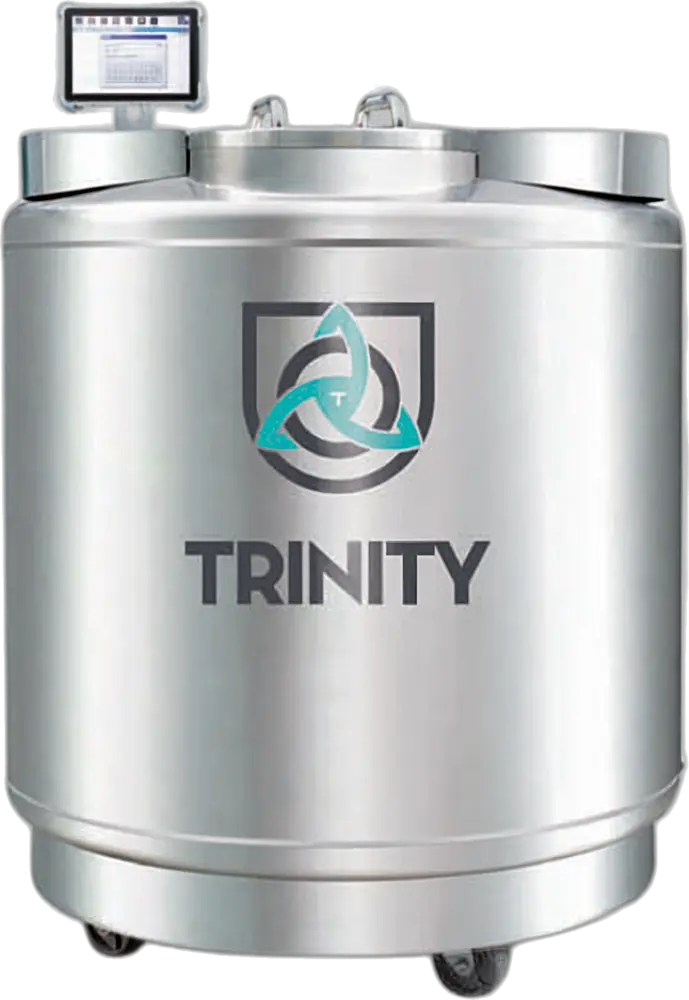
Medium capacity. Small footprint.
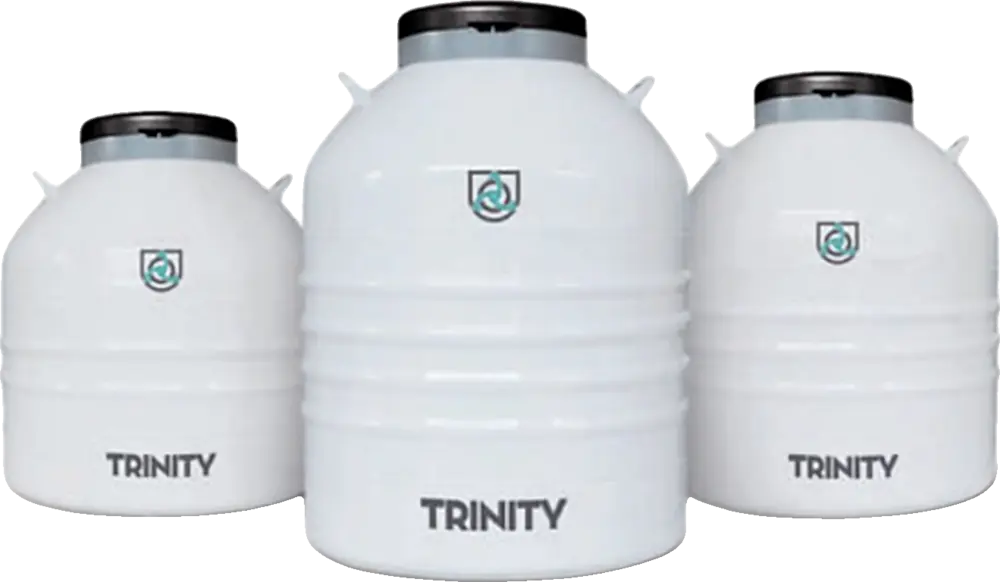
Built for the bench.
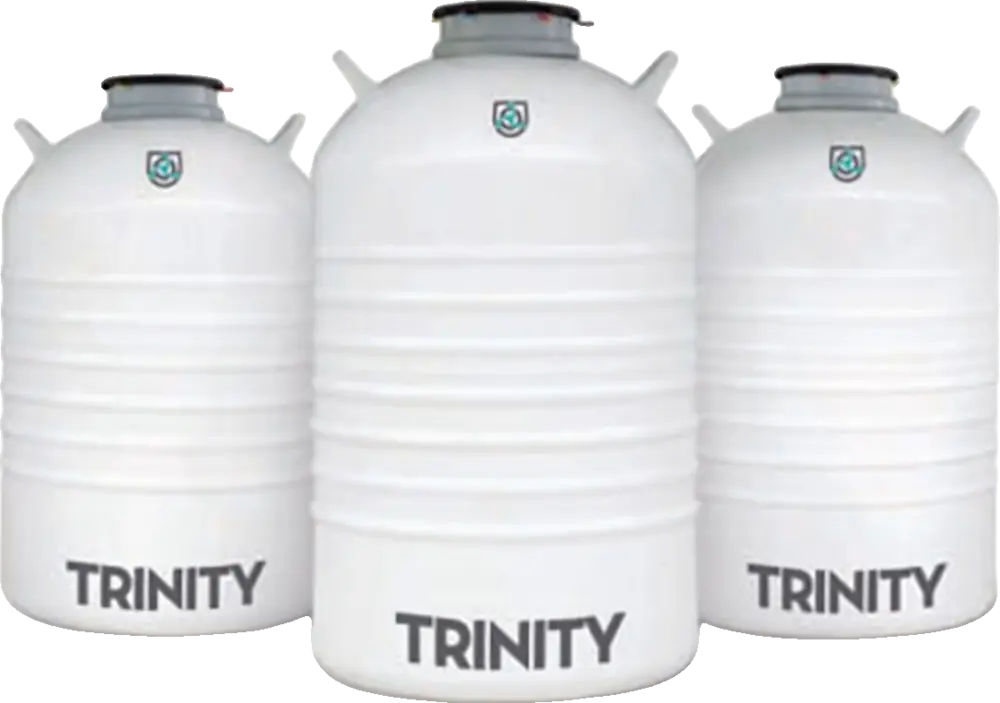
28 models. One for every sample.
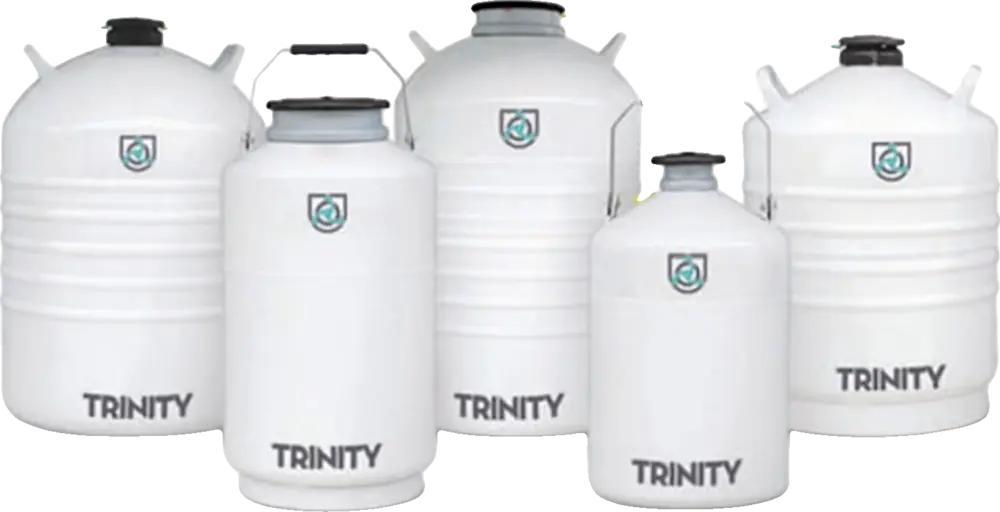
−190 °C. In transit.
Biobank Series
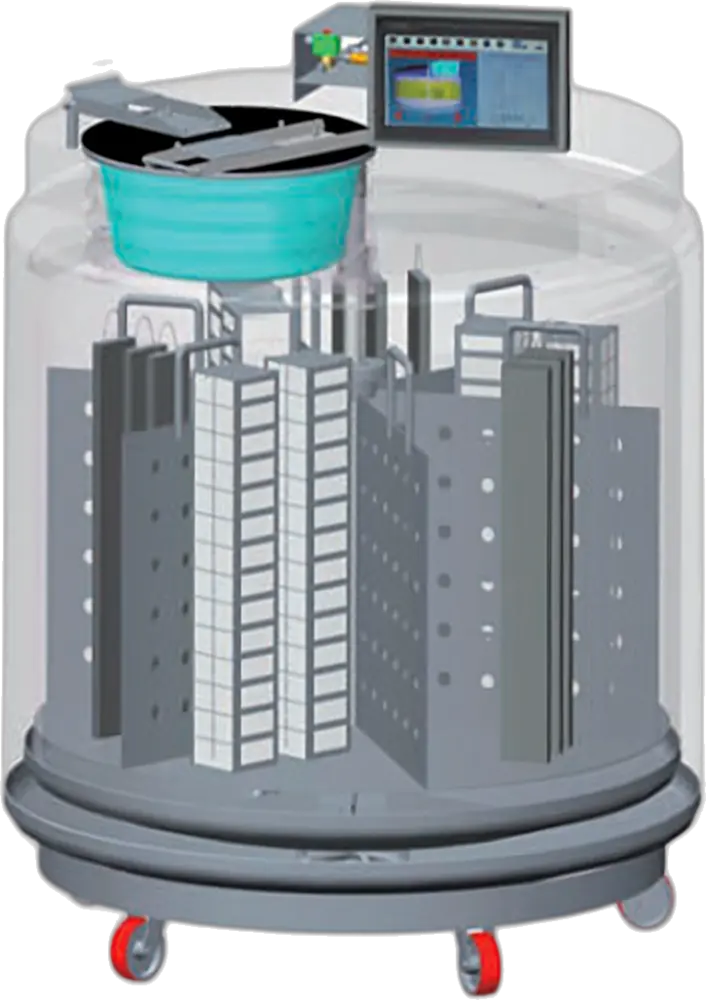
A rotating tray brings any of four or six labelled sectors to the opening. Nitrogen vapour surrounds the racks, keeping the whole chamber within 10 °C, even in vapour phase.
Find your tank
Pick what fits. We'll point you to the right series, or ask the assistant for an exact model.
Care & Safety
Follow these guidelines to protect your samples, your team and your tank.
Avoid impacting the tank body. Never toss or hit tanks during use, movement or filling.
Never exceed the specified filling limit. Overfilling can create unsafe conditions.
Use only about 80% of the tank's volume for nitrogen storage to protect structural integrity and longevity.
Consider an independent protective barrier around tanks to prevent spills during handling and storage.
Keep the tank area well ventilated so nitrogen gas cannot accumulate.
Never touch the silicone vacuum nozzle. Physically damaged tanks cannot be repaired or rebuilt and must be replaced.
Contact
Tell us what you need to store. Chat with the assistant first and we'll write your email for you.
